
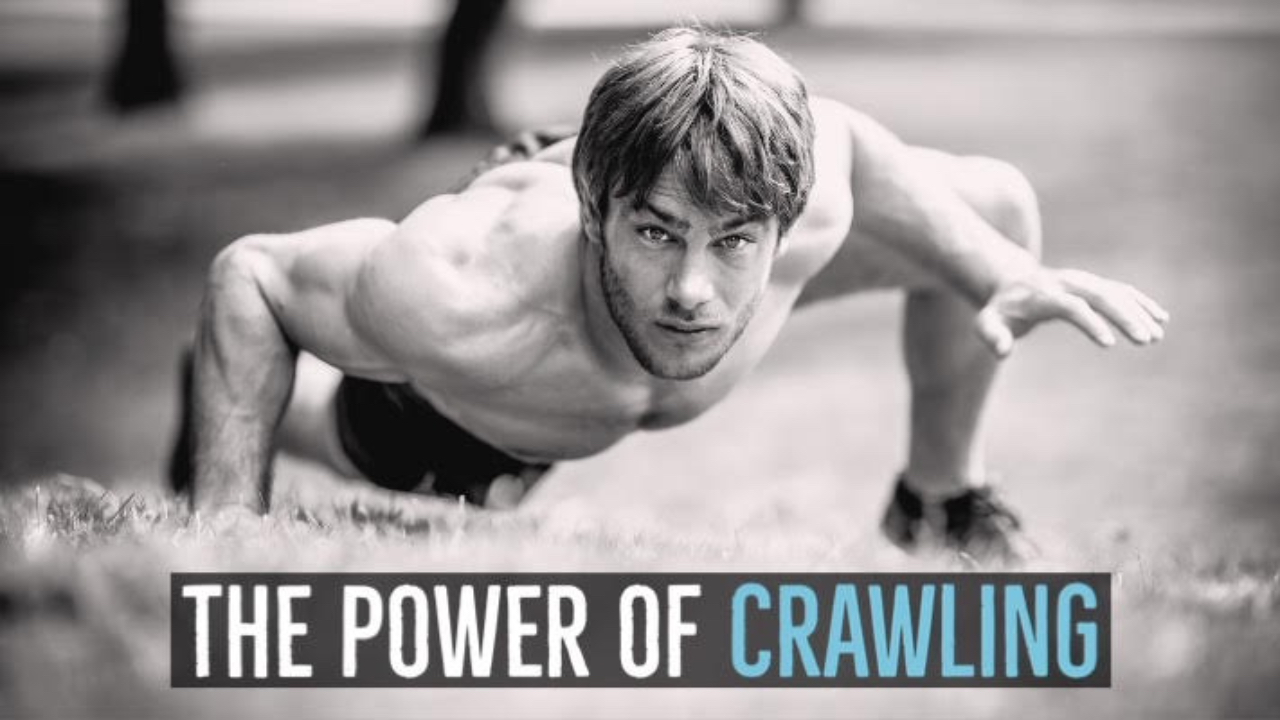
Crawling Benefits for Wrestlers and Grapplers: What It Actually Builds

Nov 15, 2023

Crawling gets prescribed constantly and explained almost never. Coaches say it is good for your core, athletes do a lap of bear crawls, and nobody can tell you what changed.

Here is what actually changes, in plain terms, and what does not.

What Crawling Builds

Shoulder support endurance

Your shoulder is holding bodyweight while the arm moves. That is the demand of posting, framing, and holding a pin — and it is a demand that pressing does not cover, because pressing moves load away from you rather than supporting it underneath you.

Trunk stiffness that survives movement

A plank trains you to brace and stay still. Grappling never lets you stay still. Crawling makes you hold the brace while both arms and both legs take turns leaving the floor, which is a harder and far more transferable version of the same quality.

Contralateral force transfer

Opposite hand with opposite foot. Force crosses the trunk diagonally, which is the pattern under every takedown finish, every bridge, and every hip escape. If that connection is weak, a crawl finds it immediately — you will feel one side lag.

Hip control in the frontal plane

Only if you crawl sideways. Forward crawling barely touches it. Lateral work loads hip abduction while the trunk resists twisting, and that is the one most grapplers fail at — the lateral crawl, step by step.

Wrist and hand tolerance

A side effect, but a real one. Loading the hand in extension builds tolerance most adults have lost. It is not grip strength, which is a separate quality, but it is the base that makes grip work safe.

What Crawling Does Not Build

This matters more than the benefits list, because the overselling is why people quit on it.

Claim you will hear Reality
“It builds your gas tank” It makes you breathe hard. That is not the same thing. Your engine gets built by longer, duller work.
“It builds grip strength” It builds wrist tolerance. Grip is a separate quality trained with hangs and carries.
“It replaces strength training” No. It is bodyweight support work. You still need to pull and hinge heavy things.
“It fixes your shoulder pain” Sometimes it helps, sometimes it is the thing that hurts. Load tolerance is individual.
The honest summary: crawling is very good at one job — making you able to hold a loaded position for longer without your trunk or shoulders giving up. Judge it on that and it delivers. Judge it on conditioning and it fails.

Why It Shows Up More in Wrestling Than BJJ

Wrestling lives in level changes and scrambles, which is repeated loaded position under time pressure. That is why wrestling rooms have used crawling for decades — see the wrestling strength and conditioning guide. BJJ has more static holding and more guard time, so grapplers often have the holding strength but not the scrambling version. The BJJ guide covers where it fits.

How Long Before It Shows Up

Three to four weeks of consistent work, two or three times a week, a few minutes at a time. The first noticeable change is almost always the same: holding top position stops feeling like a fight to stay there. That is trunk endurance arriving, not technique improving.

The variations, the dosing and the progressions are all in the crawling exercise library.

Why a Plank Is Not the Same Thing

This is the comparison that matters, because a plank is what most people do instead.

  Plank Crawl
Trunk demand Brace and hold still Brace while all four limbs move
Shoulder demand Static, both arms loaded evenly Alternating single-arm support
Hip demand Almost none Flexion, extension, and abduction under load
Matches grappling? Only the moments you are frozen The moments you are working
Fails when You get bored Your form breaks, which is useful information

Neither is wrong. But if you only have three minutes, the crawl is the better spend.

What the Weak Link Usually Is

Crawl for thirty seconds and pay attention to what quits first. Whatever it is, that is the thing you are actually training.

  • Shoulders burn out first — support endurance. Common in guard players who rarely play top.
  • Hips drift up — you are converting a brace into a stretch to avoid the work.
  • Low back arches — trunk is not holding. This is the one that ends in a sore back.
  • One side lags — diagonal connection is weak on that side. Very common and rarely noticed.
  • Wrists go first — tolerance, not strength. Crawl on fists and train wrists separately.

Two Things Worth Being Honest About

First, crawling is not a substitute for getting stronger. It is bodyweight support work with a fixed ceiling. You still need to pull and hinge heavy things, and you always will.

Second, some people’s shoulders do not like it. Load tolerance is individual. If crawling consistently makes a shoulder angry, that is information, not a character flaw — regress the variation or pick a different drill. There is nothing in a crawl you cannot get another way.

Common Questions

Is crawling actually a core exercise?

Yes, and a better one than most held drills, because it asks the trunk to stay stiff while the limbs move rather than while everything is still.

How much crawling is enough?

Three to four minutes, two or three times a week, is enough to get the benefit. More than that and you are spending time you could put into strength or conditioning.

Does crawling help my takedowns?

Indirectly. It builds the diagonal trunk connection a takedown finish runs through, but it will not teach you the takedown.

Related Reading

Next step
Crawling holds the position. Grip holds the grip.

Crawling builds wrist tolerance, not grip strength. Those are different qualities and they need different work.

Get the free Iron Hands grip and carry plan See The PHYSICAL GRAPPLER