
11 Ways to Avoid Overtraining, Fatigue, and Poor Athletic Performance
Jun 24, 2021Why are so many athletes getting hurt? Some injuries cannot be avoided. But most guys who break down are not unlucky — they are doing too much, recovering too little, and ignoring the signals until their body forces the issue.
Training, drilling, sparring, running, and lifting all take a toll. Muscles, nervous system, and connective tissue get broken down and need time to build back up. Do too much for too long and you stop adapting and start deteriorating. Here is how to spot it and eleven things that actually prevent it.
This is the long read on overtraining. If you are already in the hole and need to dig out, go to the deload protocol. For the full durability picture, start at staying on the mat.
Signs You Are Overtrained
- Resting heart rate elevated five or more beats for several days running
- Sleep getting worse even though you are more tired
- Strength down on your normal warm-up weights
- Grip feels weak in the first five minutes of training
- Nagging aches that move around and do not resolve
- Getting sick more than usual, or a cold that will not clear
- Losing interest in training you normally look forward to
- Irritability, short fuse, mood dropping
- Appetite changes in either direction
One of these on its own is noise. Two or three of them together for a week is a signal. Act on it before it becomes six weeks off.
What Is Actually Happening To Your Body
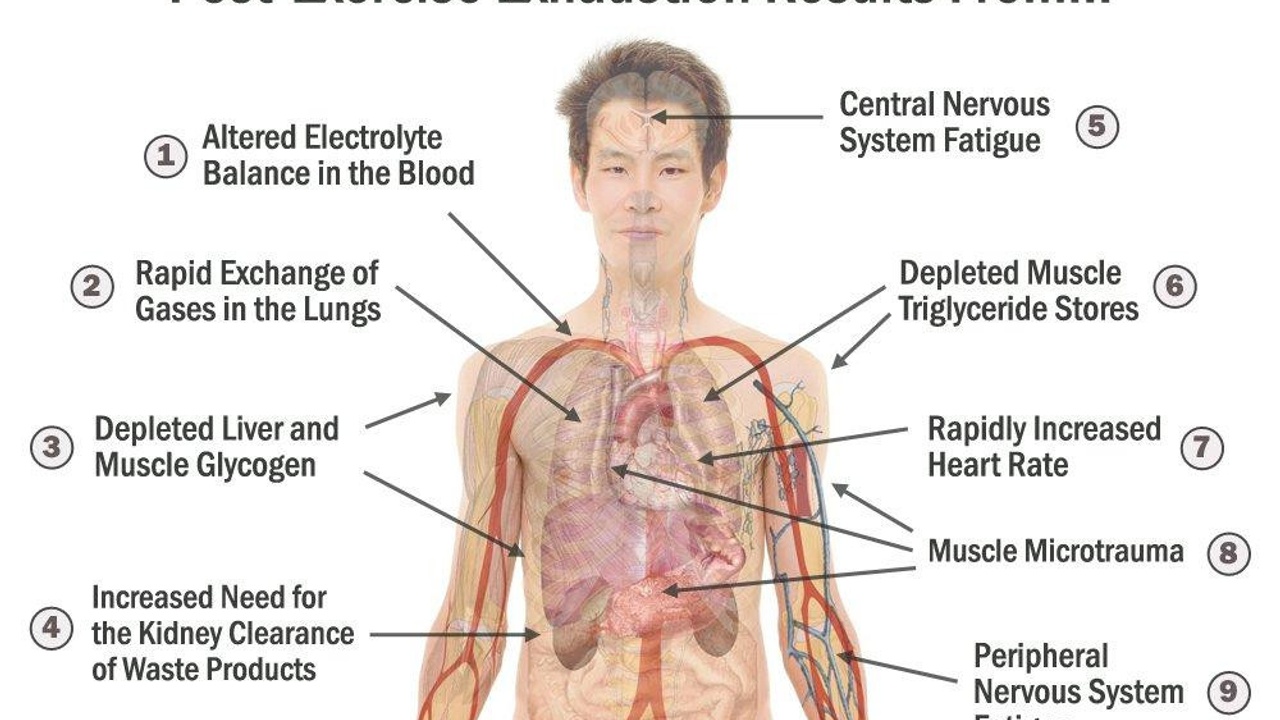
Training breaks tissue down. Recovery builds it back higher than it was. That is the whole mechanism, and it only works if the recovery half actually happens. Muscles, nervous system, connective tissue, and the endocrine system all recover on different timelines — muscle in a day or two, connective tissue over weeks, nervous system somewhere in between.
When you train hard again before the slow systems have caught up, you keep the fatigue and lose the adaptation. Do that for a month and you are training hard for no return. Do it for three and something breaks.
The counterintuitive part: the athlete doing less is often the one adapting more, because they are actually completing the recovery half of the cycle.
11 Ways To Avoid Overtraining
1. Sleep First
Eight hours is the target, and it is not negotiable if you are training hard. Nothing on this list matters as much. If you are sleeping five hours and asking about recovery supplements, you are optimizing the wrong end.
2. Eat Enough
You cannot recover in a deficit forever. If you are cutting weight and training hard at the same time, expect performance to suffer and plan for it. Protein at every meal, enough total calories, and do not train fasted for hard sessions.
3. Take A Real Rest Day
One full day a week with no mat and no gym. Not active recovery, not a light roll. Rest.
4. Deload On Purpose
Every six to eight weeks, cut volume in half for a week. Keep the same movements, drop the sets. One easy week costs you nothing and prevents the month off.
5. Do Not Go Hard Every Session
Most training should be moderate. If every roll is a war and every lift is a max, you are not training, you are testing. Hard days should be two or three a week, tops.
6. Track Something
Resting heart rate in the morning, bodyweight, and a one-to-ten note on how you feel. Thirty seconds a day. Trends over two weeks tell you more than how you feel on any single morning.
7. Manage Total Load, Not Just Gym Load
Mat time, lifting, running, work stress, family stress, and bad sleep all draw from the same account. A stressful month at work means less training volume, not the same volume with more caffeine.
8. Warm Up Properly
Not because it prevents all injuries, but because it tells you how you are doing. The first five minutes of a proper warm-up is the best diagnostic you have. The tournament warm-up piece covers the structure.
9. Train The Weak Links Directly
Neck, grip, hips, and the muscles that hold posture under load. These are what fail first in grappling. Neck and upper back and grip strength both have their own protocols.
10. Do Not Chase Soreness
Soreness is not a measure of a good session. Getting crushed and being unable to train for three days is a net loss even if it felt productive.
11. Get Ahead Of Small Problems
The finger that has hurt for three weeks, the knee that clicks, the shoulder that only hurts in one position. Handle these while they are annoying, not after they are limiting. A small problem trained through for two months becomes the reason you take three months off.
The Two Habits That Do The Most
If you only take two things from this list, take these. They are boring and they are also where almost all of the return is.
| Habit | Time cost | What it prevents |
|---|---|---|
| Sleeping eight hours consistently | None — it is a scheduling decision | Most of everything else on this page |
| Deloading one week in six to eight | About six lost weeks a year of reduced volume | Months off with an overuse injury |
Everything else — the tracking, the warm-ups, the weak-link work — is real but secondary. People who get overtraining wrong almost always have one of these two missing, not a subtle programming error.
What To Do If You Are Already There
| How deep | What to do | How long |
|---|---|---|
| Early — one or two signs, one week | Cut volume 30 percent, add a rest day, prioritize sleep | 1 week |
| Moderate — several signs, two to three weeks | Cut volume 50 percent, no hard rolls, no maxes | 2 weeks |
| Deep — signs for a month or more, performance down | Near-complete rest from hard work, walking and light movement only | 2–4 weeks |
| Sick or injured on top of it | Full rest until symptoms clear, then rebuild from half your old volume | As long as it takes |
For the structured version of digging out, the deload and recovery protocol walks through the specific weeks.
Common Questions
Is overtraining real or just an excuse?
It is real, but true clinical overtraining syndrome is rare. What most athletes have is overreaching — too much accumulated load without enough recovery. The fix is the same and it works fast if you catch it early.
How long does it take to recover?
Caught early, one to two weeks. Left for a month or more, expect three to six weeks of significantly reduced work before you feel normal.
Can I keep drilling if I stop rolling hard?
Yes, and that is usually the smartest version of a deload for a grappler. Keep technical volume, cut intensity.
Should I stop lifting when I deload?
No. Keep lifting, cut the volume in half. Losing your strength base makes the return worse.
Recovery is one layer of a bigger picture. The full strength and conditioning guide for grapplers covers how strength, conditioning, and recovery fit together across a training year.
Hands that hold on when the rest of you is done.
Start with the free Grappler’s Iron Hands 14-day challenge — hands, wrists, and forearms built to keep their grip deep into a hard roll. Or step into THE PHYSICAL GRAPPLER, built around mat-specific strength, grip, and conditioning.
Start Iron Hands FreeGet THE PHYSICAL GRAPPLERGrip last. Win late.